




Our Ocean Cleanup Initiative
As well as planting trees and protecting habitats we are funding projects to help tackle the huge amount of plastic that is in our Oceans.
Together. For a plastic-free ocean.
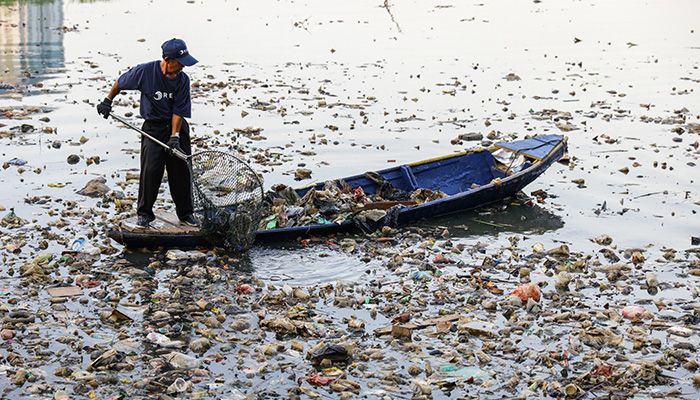
ReSea Project Collecting Plastic 1
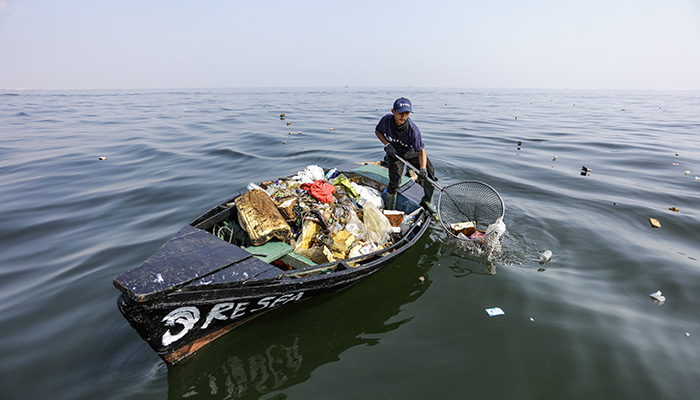
ReSea Project Collecting Plastic 2
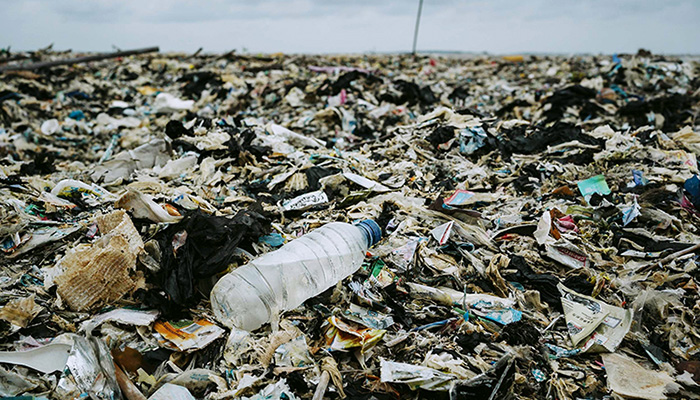
ReSea Project Plastic Waste 1
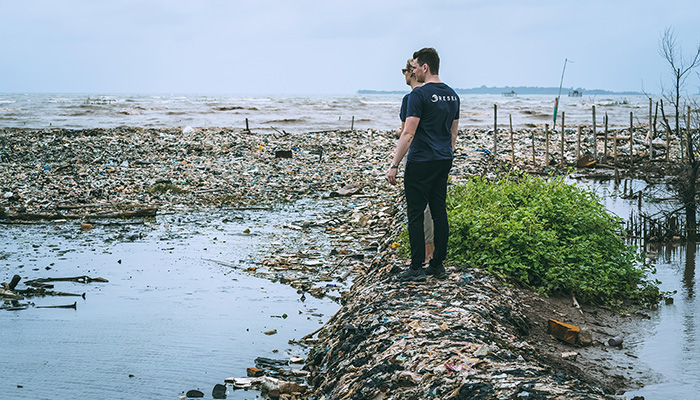
ReSea Project Plastic Waste 2

ReSea Project Sorting Plastic
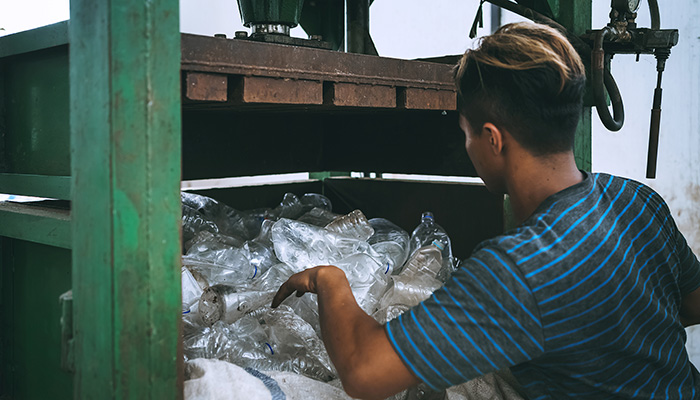
ReSea Project Recyling Plastic
We’ve teamed up with ReSea Project in Indonesia and fund plastic removal on a monthly basis.
This purpose-driven company is making waves beyond the sea as it’s community-driven cleanup solution creates jobs through the demand of local cleanup teams. In turn, for those employed within cleanup teams, this supports their income and improve living conditions, and the means to better support their families.
ReSea Project’s cleanup process is certified by DNV, and all plastic collections and its origin are fully traceable. The plastic is recovered from oceans and rivers, sorted, bagged, tagged, weighed and documented, and delivered at local waste banks who distribute the plastic for recycling and waste handling purposes.
Further to this partnership, we strive to develop innovative products that contribute to preserving our waters. So far we’ve introduced carpet underlay made from recycled plastic, and carpets made from nylon fish nets retrieved from the Ocean. And we won’t stop there! Click here to find out more.
Ocean Cleanup Project FAQs
We have joined the fight against the ocean plastic crisis by cleaning plastic waste from oceans and rivers through ReSea project. For every square meter of flooring sold we remove 25 grams of plastic (equivalent to one plastic bottle) from oceans and rivers through our partnership with ReSea Project who holds us accountable for this claim.
To check our progress, visit the ReSea Project Website.
ReSea Project’s cleanup solution is community-driven, meaning that people from local communities residing in river and coastal areas in Indonesia, such as local fishermen who's lives are affected by plastic pollution. The cleanup team uses boats and nets to recover plastic waste that’s already reached the oceans, and stopping the inflow by tackling plastic polluted rivers.
To check our progress, visit the ReSea Project Website.
ReSea Project collects many types of plastic littering the ocean and rivers, especially single-use plastics. These are amongst the more commonly found plastic types:
- PET (Beverage bottles, food jars, clothing, some shampoo bottles)
- HDPE (Milk jugs, plant pots, toys, some plastic bags)
- LDPE (Shopping bags single-use, flexible bottles, bubble wrap, packaging films)
- PP (Bottle caps, drinking straws, diapers)
- PVC (Credit cards, pipes, synthetic leather)
- PS (Plastic-foam cups and containers, meat trays, yogurt containers)
- OTHER types (Nylon fabrics, baby bottles, car parts)
ReSea Project is certified to DNV’s Chain of Custody Standard for plastic recovered from oceans and rivers. The certification provides assurance from the independent third party DNV of the plastic reclaimed from rivers and oceans, traceability of the total collection process, and the amount of plastic we remove.
Each member of the cleanup team is compensated well above local minimum wages, ensuring better livelihoods for the cleanup team and their families. The high level of traceability and accountability of the cleanup process and the documentation of all plastic recovered also helps to ensure fair compensation to the cleanup team – the very heart of ReSea Project’s cleanup solution.
A blockchain-based tracking system secures real-time data and track the origin of the recovered plastic and all the steps of the cleanup process until delivery at a local waste bank.
Once recovered, the plastic is sorted in the boats and put into sacks, bag and tag the plastic sacks, weigh and document the impact, and transport the plastic waste to local waste banks who then again weigh the plastic and distribute the plastic waste for recycling and waste handling purposes.
Other FAQs
We have a fleet of delivery vehicles that all produce CO₂ emissions. We are constantly talking to manufacturers and reviewing what is available on the market, as of yet there is no electric vehicle that can cope with the weight and distances ours have to travel to reach our full UK customer base. As soon as the technology moves on we will always be one of the leaders to adapt. Until then we optimise our delivery routes for fuel efficiency, monitoring driver performance on acceleration and braking to limit fuel wastage and we also offset our CO₂ for our fleet making sure that each delivery is Carbon Neutral.
It is true that plastic is in many of our products, and quite a number aren't yet able to be fully recycled. We are working hard to develop new products made from recycled materials that are fully recyclable.
So far we have had some success with this such as:
- Carpet Underlay made from recycled plastic.
- Carpets made from nylon fish nets retrieved from the Ocean.
- EvoCore Flooring made from 80% recycled materials and is 100% recyclable.
- Laminate/Wood Underlay made from 100% Recycled Materials and is 100% recyclable
- Artificial Grass made from 80% recycled materials and is 100% recyclable
We are continuing to build on these developments and expand our range of more environmentally friendly products.
The flooring industry is somewhat behind the times like many industries. By stopping selling all products that aren't fully environmentally friendly we would have such a small range that we wouldn't be able to sustain ourselves as a business and would be out of business. We feel that by being involved in the industry, by leading it and changing it from within we can have a far greater positive impact on the environment than we could if we weren't in business.